Home Physiotherapy in Barcelona: How It Works and When It Can Help You

Home Physiotherapy in Barcelona: How It Works and When It Can Help You
7 de December de 2025Home physiotherapy has become an increasingly popular option for people who want professional care without having to travel. Whether it’s for convenience, lack of time, or a physical limitation, receiving treatment at home can be an effective and safe way to speed up your recovery.
In this post, you’ll find a clear overview of what home physiotherapy is, when it can be helpful, how it works within the public healthcare system, the role of private health insurance, and our recommendations based on 15 years of experience in home-based care.
What is home physiotherapy?
Home physiotherapy is especially useful when pain, an injury, or physical limitations make it difficult to leave home or get to a clinic, as well as in post-surgery rehabilitation processes that require rest but benefit from early intervention.
A licensed physiotherapist comes to your home to perform an assessment, design a personalised treatment plan, and provide ongoing follow-up adapted to your progress.
The goal is the same as in a clinic: treat the injury or condition, relieve pain, improve mobility, restore function, and prevent relapses.
The difference is that the service takes place in your own home, offering comfort and a familiar environment.
How does home physiotherapy work in the public healthcare system?
In Catalonia, physiotherapy is included within the public healthcare system, and home-based treatment can be requested in specific situations.
Generally, the public service offers home physiotherapy when:
- The person has severely limited mobility.
- There is dependency or disability that prevents attending the health centre.
- There are clinical criteria that justify the therapist’s travel.
To request home physiotherapy, you generally need to:
- Book an appointment with your primary care doctor.
- Allow them to assess your situation and, if appropriate, issue a referral for home physiotherapy.
- Wait for the health centre to confirm whether you meet the eligibility criteria.
You can find more information and guidance on the website of the Servei Català de la Salut.
Do private insurance plans cover home physiotherapy in Barcelona?
Coverage depends on your policy:
- Basic plans usually include physiotherapy, but only at approved clinics.
- Reimbursement or premium plans sometimes allow home physiotherapy and partial reimbursement, although not all of them include this benefit.
It’s recommended to:
- Review your policy carefully.
- Confirm whether the insurer covers the therapist’s travel.
- Ask if there is an annual session limit.

Our advice:
Contact your insurance provider to confirm your coverage. If the service is included, make sure to follow their procedures: request any required reports from your physiotherapist and submit the invoices within the established deadlines. This will help avoid delays and ensure you make full use of your benefits.
Is it possible to combine public and private home physiotherapy?
Yes. In many cases, combining both can be an effective strategy, as it allows you to increase the number of weekly sessions by complementing public healthcare treatment with private sessions.
This combination can be especially useful after surgery, for older adults, and in injuries requiring consistent treatment.
However, it’s essential to align the work between professionals. Coordination ensures that the approach is coherent, complementary, and effective.

Our advice:
Always inform your primary care doctor about the combination of treatments. Ask physiotherapists to document the techniques used and your progress so that this information can be shared across professionals, ensuring a comprehensive approach.
Which conditions are most commonly treated with home physiotherapy?
Home physiotherapy makes it possible to treat any condition that doesn’t require large equipment or specialised facilities.
However, some situations are especially common:
Older adults and reduced mobility
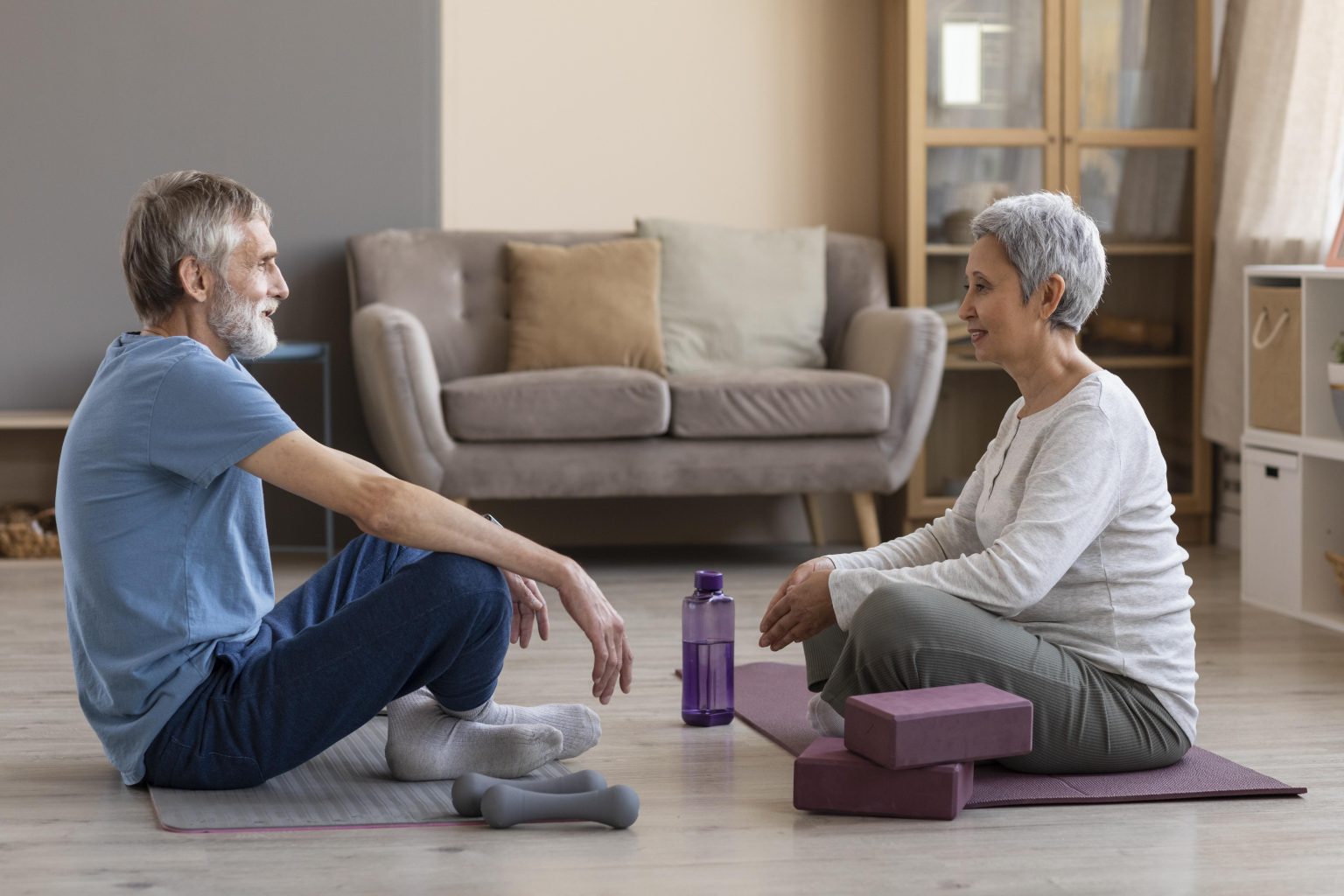
Ageing and certain conditions can limit mobility and independence. Home sessions focus on strength, balance, and coordination to prevent falls and promote active ageing.
We also guide caregivers and family members with instructions and advice to improve the patient’s quality of life.
Neurological conditions
Conditions such as stroke, Parkinson’s disease, multiple sclerosis, or cerebral palsy require continuous and highly tailored treatment. Home-based physiotherapy facilitates rehabilitation without travel and helps maintain mobility, function, and independence.
Post-surgery rehabilitation
After surgery, proper recovery is essential to prevent complications and ensure a safe return to daily activities.
We treat hip and knee replacements, ankle and foot surgeries, and other musculoskeletal interventions.
The approach includes:
- Pre-surgery preparation
- Early mobilisation when medically authorised
- Learning to use crutches
- Gradual load progression
- Guidelines for rest and pain management
- Muscle activation to prevent stiffness and loss of strength
This support reduces the risk of stiffness, persistent pain, or loss of function, promoting a safer and faster recovery.
Home physiotherapy fees in Barcelona
In Barcelona, home physiotherapy sessions typically range from €50 to €70 per session (around one hour).
However, the exact price may vary depending on:
- The physiotherapist’s experience and specialisation
- The type of treatment needed (post-surgical rehab, neurological therapy, advanced manual therapy, etc.)
- The duration and complexity of the session.
Our advice:
If you’re considering ongoing treatment, ask about packages or discounted plans.
At Movo Fisioterapia, we offer significant reductions on 5- and 10-session packs to support long-term rehabilitation processes.
Movo’s home physiotherapy service in Barcelona offers high-quality, personalised treatment.
Our team provides:
- A complete assessment to identify the real cause of pain or limitation
- Observation of your environment and daily habits (how you sit, walk, go up stairs, or compensate for an injury), which is key to tailoring the treatment
- A specific plan adapted to your condition and goals
- A combination of manual therapy, therapeutic exercise, and movement education
- Travel with all necessary equipment: treatment table, resistance bands, exercise tools, functional taping…
- Training and support for family members or caregivers to ensure safe routines that don’t compromise recovery.
Do you have questions or want to know whether home physiotherapy is right for you?
Contact us and tell us about your situation — we’ll be happy to advise you.